
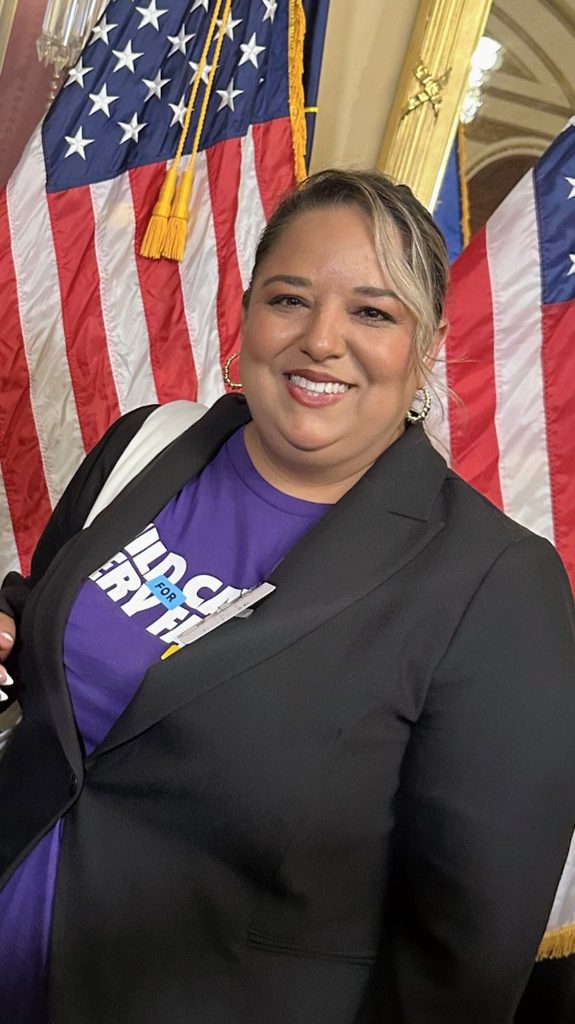
Wendy didn’t plan to become an organizer. For years, she kept her distance from anything political. “I don’t like to choose. I don’t feel like I have a side,” she said. But this year, Wendy found herself organizing fellow early childhood educators in Southern NM, traveling to Washington, D.C, meeting members of Congress, and telling them directly what changes she wanted to see.
Wendy is a home-based childcare provider in Sunland Park. She started as a registered home 15 years ago when she started her own family and wanted to stay home with them. She became licensed a few years later with encouragement from her cousin. Since then, she’s kept building her skills and credentials with education and training.
That journey hasn’t been without obstacles. Local licensing and zoning were more challenging than they should have been, which is why Wendy advocated for Senate Bill 96, which alleviates some of those barriers for home-based providers. Knowing that other providers have the same trouble navigating that system, she helped to start a support group with fellow OLÉ members Olga and Maggie to walk them through the process step by step: handbooks, trainings, paperwork, inspections. She’s excited to see one provider in the group just get licensed and two more with inspections scheduled!
Last month, Wendy traveled with other OLÉ members to Chicago for a childcare convention, where childcare advocates from around the country looked to New Mexico. “We were famous,” Wendy exclaimed. “They all want to know what we’re doing, how we’re doing it, and how it’s going.” She found herself representing the state’s progress on childcare, but the trip also opened her eyes to how much more work remains. “We’re ahead of the game, but there’s still more.” Wendy said the state’s universal childcare system didn’t plan ahead for supporting the providers who are doing the work. “It’s changed things for families, but… if there’s not enough providers, if we don’t have enough on the workforce, who’s gonna take these kids?”
With more families qualifying for care, waitlists are growing. Providers are open longer, running out of space, and their own pay hasn’t kept pace with the added workload. “A lot of these providers have been working so hard, no retirement, no insurance, no benefits, and we’re still doing the work and the pay is not getting better. We’re trying to figure out how to make ends meet.” It really sunk in for Wendy at the convention that to make a change we have to demand it with people power: “We need to talk, we need to complain, we need to put it out there,” Wendy emphasized. “We’re the ones doing the work. We’re the ones in the classroom, the ones educating. We need that to come up.”
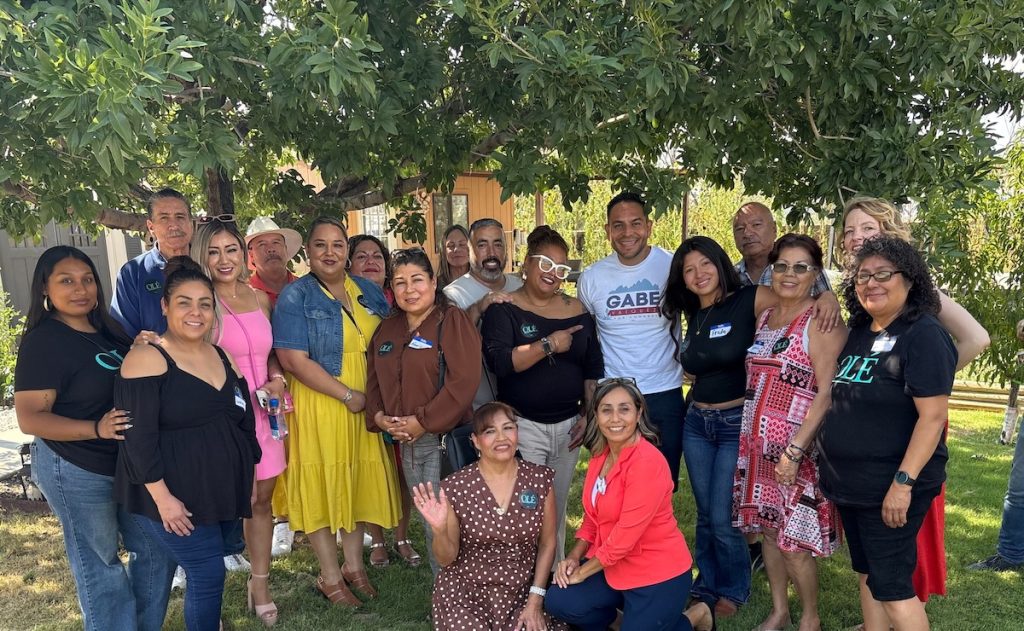
OLÉ members in Southern New Mexico had a chance to meet their Congressman, Gabe Vasquez, in Las Cruces a few weeks ago. Wendy felt it was a powerful experience for herself and the others, to be able to share their stories and their needs, to ask the Congressman where he stands and what he’s really willing to do. Afterward, they decided that OLÉ should endorse his re-election. For many of them, it was the first time they felt someone in power was actually listening.
For Wendy, her journey from “not political” to “community organizer” became clear when she started to talk to her community about registering to vote. “We never thought that anything we did, even if we vote, would change anything,” she admitted. But now, after hearing organizing stories from around the country at the convention, and meeting face-to-face with elected officials, she sees it differently: “I do get to choose, and I get to decide,” she declared. “It matters what I believe in, and if someone is not aligned with that, then I shouldn’t put them in a position where they can decide for us.”
Now she tells other providers the same thing: that their beliefs and choices matter, that showing up matters, and that change only comes when we come together to do something about it. This motivation has led Wendy to begin planning actions to get out the vote in her community. She’s starting small at first: finding out who’s registered, who needs to register, who needs support, and having those conversations that show how policies and elections affect their everyday lives. She tells providers, “you need to know that you deserve this…this matters for you, for your wage.”